
Most students know they need to be productive, because getting into an excellent college requires much more than good grades nowadays. It now requires a well written application highlighting many interests and accomplishments, including a high GPA.


Most students know they need to be productive, because getting into an excellent college requires much more than good grades nowadays. It now requires a well written application highlighting many interests and accomplishments, including a high GPA.
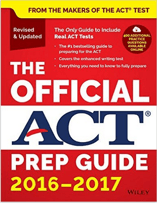 When designing an ACT study plan, one key question is “what materials will I use?” Luckily, the most effective material is also the most inexpensive (more on that later).
To begin, it’s helpful to ask yourself one basic question: am I fundamentally comfortable using online materials or not? There are many web-sites and “apps” available to help you prepare for the ACT. But for some people, plain old paper and pencil is still their preferred way to learn. I tend to encourage students to at least consider an online approach, since it’s generally very convenient and because many online resources are “adaptive,” meaning they give you suggested practice content based on how you’ve performed on previous practice problems to build on your strengths and address your weaknesses. But, if an online approach just isn’t for you, don’t force it.
Perhaps the most intimidating part of the College Admissions process is composing your personal statement. But, it doesn’t have to be that way, here are some tips to help you out.
 Strategy is an intrinsic part of preparing for standardized tests. Without the proper strategies even the most advanced students find themselves performing below their full potential.
 Three little letters: SAT.
For many years now, those three little letters have evoked feelings of dread, fear and anxiety in the minds of countless high school students across the country. We are speaking of course, of the Scholastic Aptitude Test. It is a standardized exam offered by the College Board used in determining college admissions and, in many cases, scholarships to a given institution. The ACT (American College Testing) is also offered and accepted at all four-year institutions just like the SAT.
As many of you may know, the SAT has been around for quite some time now, with the first test being administered on June 23, 1926. To this effect, for the first time in 11 years, the writers of the exam figured it was time their exam was updated and thus, the newly reformatted SAT hit test-takers desks March 2016 for the first time.
This article will give you the full scoop on this new exam, its structure and breakdown, and more specifically, what you need to do differently to make sure you succeed on this new test.

Better organization skills can benefit almost anyone in any stage or area of their life.
When some people hear the word organization their first thought is about home organization and a big box store specializing in ridiculously overpriced closet-systems. There are others who seem to find happiness in staying organized; these are the folks who are constantly making lists and crossing things off of them.
For students, developing organizational skills is inherent to achieving academic success whether as a high school freshman studying for final exams for the first time, or a junior taking the first steps in the college admissions process. Applying to college can be particularly overwhelming due to the numerous requirements and deadlines. This process takes place simultaneously with taking AP Exams and working to maintain your GPA among feelings of “senioritis.”